Friday, May 3, 2013

Faculty Highlight- Dr. Rosemarie Booze


After interviewing Dr. Rose Booze in December, the thought of cleanly and clearly describing all of her accomplishments and interesting background was daunting. On paper and in person she conveys a history of passion and success in studying neurodevelopmental disorders, and it is exciting to get to share some of that history here.
Dr. Booze described gaining her initial biological perspective, scientific curiosity, and general grit while growing up in rural Oregon on a sheep farm. She went to a 200-child, 2-room school house from kindergarten to 8th grade, and sold cows to pay for her undergraduate education at Oregon State University. As a burgeoning young scientist, she worked for Libby’s, a cannery where she ran the machine that mixed the peas and carrots. Of this she said “I know there’s cans out there that had only peas and only carrots!”… I’m sure the consumers of her unexpectedly monochrome cans of food would think their sacrifice in preserving her mental energies was worth it.

From OSU, Dr. Booze obtained a dual degree in zoology and psychology, and then went to work for a lab for the Environmental Protection Agency in Corvalis. This work experience first sparked her conscious interest in science, and specifically in toxicology and the effects of pesticides. About this she said, “Well I always loved the brain, and so then I asked ‘what do I do?’” Her trusted mentors suggested that she pursue the study of neurotoxicology; she applied to graduate school and got into a number of programs, but ended up taking a less traditional path to admission whereby Johns Hopkins University actually pursued her and requested that she apply and accept their admission offer to their Neurobiology program [she did]. Interesting side-note: She had never been to the east coast before and intended to visit the campus before accepting the offer, but Mount St. Helens erupted and foiled those plans! Thus, Dr. Booze moved from Corvalis, Oregon to inner city Baltimore without ever having met the people or city she was to work with. If you’re wondering when Dr. Charlie Mactutus factors in, this is it. She met Charlie on her first day of graduate school when he came in to talk to the graduate students as a post doctoral fellow. “I thought who is this guy? I don’t understand a word he’s saying... he was a New Yorker and he talked really fast and was talking about an unfamiliar area… he was talking about neurochemistry…”

During graduate school, Dr. Booze worked with David Olton, a scientist who was so influential that the Johns Hopkins program in behavioral biology is named for him (http://krieger.jhu.edu/behavioralbiology/about/). Dr. Olton invented the radial arm maze for rats, which I have not had the pleasure of using but hear is very important. Dr. Booze said that she really enjoyed graduate school, and this was certainly evident by the way that she talked about it. She then went on to do her post doctoral fellowship at Duke University in Neuropharmacology and published the first paper that mapped the receptors of the neuroadrenergic part of the brain, as well as 6 more papers after that (and in the middle of all of this she married Charlie). She then accepted her first faculty position at Wake Forest University as an Assistant Professor of Physiology and Pharmacology, and in 1991 she went to the University of Kentucky where she rose through the ranks to Full Professor, and had her two sons with Charlie.

The Booze-Mactutus family moved to Columbia in 2002 (and I’m pretty sure I heard them talking about boxes that they still hadn’t unpacked as recently as 2010) to accept positions in, you guessed it, the Department of Psychology. She also holds an adjunct appointment as Professor of Pharmacology, Physiology, and Neuroscience in the USC School of Medicine, and served as the interim Vice President for Research for a few years around 2010, after initially serving as Associate Vice President of Research. She reported these dual roles to be “very intense”, include a lot of administrative work, and provide a broad perspective of science and other fields of study. Dr. Booze eventually switched back to focusing solely on her own program of research, and of this she said, “At some point you have to choose between wanting to continue your own program of research and administrative roles.” Since I am always interested in life lessons from those who’ve “gone before”, I asked Rose if she had any particularly important piece of advice for students, to which she said “Persistence, you have to be flexible… and you have to be good at managing stress!” Dr. Booze sets an example in this realm by making sure that she stays active through yoga classes, running, and strength training, to keep the pressures of academia at bay. I must note here that she always seems happy and excited about her work, always, and so it seems that she has surely solved this part of the life's puzzle.  

Currently Dr. Booze is collaborating with Dr. Mactutus on a grant from the National Institutes of Health (R01) that investigates relations among phytoestrogens and attention. She is also collaborating with faculty throughout the University to understand potential developmental trajectories of obesity by studying MCR4 knock-out mice (and these animals are very impressive, and very expensive transgenic feats of science). She will get to present some data from her work on phytoestrogens in Ireland this summer, and her lab’s recent trip to Puerto Rico is making my next conference in Atlanta seem a little pale!

Dr. Booze can be contacted through the Department of Psychology at the University of South Carolina, and the time that she took to talk with the PGSA is greatly appreciated! http://www.psych.sc.edu/faculty/Rosemarie_Booze

Monday, April 15, 2013

Nickelodeon Theater - Psychology Profs Teach Science from the Screen


https://mail-attachment.googleusercontent.com/attachment/u/0/?ui=2&ik=fc32ab7026&view=att&th=13e0dec214902a3c&attid=0.1&disp=inline&safe=1&zw&saduie=AG9B_P84Y7N8SG4eB3oKkWh-iN0F&sadet=1366034267871&sads=ZksDYm8V-AGPcVLcr84MpYUTtkADrs. Jane Roberts and Steven Harrod are  translating their skills from the lab and university to the big screen by accepting invitations to participate in the Science on Screen program at the Nick. The Nickelodeon Theatre is South Carolina's oh-so-wonderful non-profit cinema (since 1979), located on the 1600 block of Main St. in what was the historic Fox Theater.


Taken from the Nick's website... 

Science on Screen is the Nickelodeon Theatre's new Community Film Forum series. Each month the series pairs a scientist with a classic film which relates to his/her field of study. Before each screening, a scientist will present on their work and how it is portrayed in the film. This fun series aims to provide new insights into the movies, and give new insight into the science behind them. We are partnering with the University of South Carolina's College of Arts & Sciences to bring you this series. Science on Screen is an initiative of the Coolidge Corner Theatre with major support from the Alfred P. Sloan Foundation.

In February Dr. Jane Roberts selected and introduced the movie Gattaca with a quick education on phenotypes and genotypes, and followed it's credits with a discussion on themes around perceptions of genetic determinism and the fantastic symbolism in the movie... there is no gene for the human spirit, right?

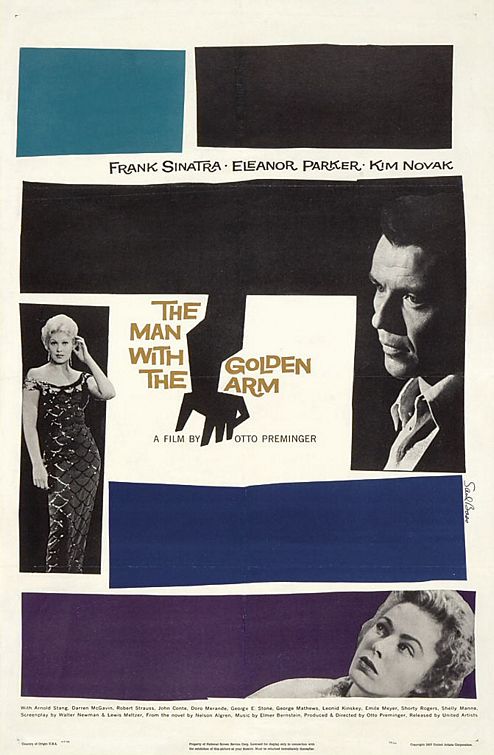
This June, Dr. Steven Harrod will present The Man with the Golden Arm (June 10th).

Here is a complete list of showings, both past and future (from http://www.nickelodeon.org/programs/index.php?programID=86):

1/28 - The Birds paired with Loren W. Knapp, PhD - Associate Professor Department of Biological Sciences and Assistant Dean of Undergraduate Student Affairs, College of Arts and Sciences, College of Arts & Sciences, University of South Carolina

2/18 - Gattaca paired with Jane E. Roberts, PhD - Jane E. Roberts, PhD. Associate Professor Department of Psychology, College of Arts & Sciences, University of South Carolina

3/25 - The Perfect Storm paired with Claudia Benitez-Nelson, PhD - Director, Marine Science Program, Department of Earth and Ocean Sciences, College of Arts & Sciences, University of South Carolina

4/29 - There Will Be Blood paired with Camelia C. Knapp, PhD - Associate Professor Department of Earth and Ocean Sciences, College of Arts & Sciences, University of South Carolina

5/13 - Blade Runner paired with Richard Vogt, PhD- Professor Department of Biological Sciences, College of Arts & Sciences, University of South Carolina

6/10 - The Man with the Golden Arm paired with Steven Harrod, PhD - Associate Professor Department of Psychology, College of Arts & Sciences, University of South Carolina

11/14 - Robot & Frank paired with Jason O'Kane, PhD - Associate Professor, College of Engineering and Computing, Department of Computer Science and Engineering, University of South Carolina

Tuesday, November 13, 2012

Student Highlight: Congrats to Landhing!

Landhing Moran, a 6th year student in the experimental psychology doctoral program, was awarded one of ten 2012-2013 dissertation fellowships that are given by USC’s College of Arts and Sciences (CAS), a huge accomplishment. The fellowship fully funds her stipend and provides a little extra to complete research for her dissertation… congrats Landhing! The fellowship is awarded annually: http://www.artsandsciences.sc.edu/handbook/sites/default/files/pdf/fellowship_diss_memo_8-21-12.pdf
I sat down with Landhing at Immaculate Consumption to have coffee/lunch and she told me a bit about her work and the paths she’s taken before and during graduate school to end up doing what she’s doing today. Before talking with her, the research world within the experimental program was largely a mystery to me. Well, really a complete mystery. Where are these animals being kept that must be used in the animal research?For that matter, where are the students and faculty working with them? [Answer: the basement of Barnwell is apparently home to a truly diverse array of life forms.]

Landhing studies the cognitive abilities of HIV-infected rats, including what they can they learn and remember, and whether phytoestrogens protect neurological cells against the harmful effects of the HIV virus. [From Wikipedia: phytoestrogens are plant-derived xenoestrogens functioning as the primary femalesex hormone not generated within the endocrine system but consumed by eating phytoestrogenic plants… so female sex-hormones derived from plants rather than endogenously.] Landhing’s particular interests lie in the cognitive piece of the puzzle, and her primary mentor is Dr. Charlie Mactutus.

To start more at her beginning, Landhing grew up in Baltimore, Maryland, and told me that her first name is Chinese. Interesting fact: Landhing’s mother is also named “Landhing”, and Landhing’s father and brother also share the same first name. “This is particularly problematic at doctor appointments,” said Landhing with the matter-of-fact tone that you’d expect from a training scientist who spends her days controlling, observing, and quantifying. Landhing said she always liked science and enjoyed biology in high school. When she learned that her undergraduate alma mater, the College of Notre Dame in Maryland, had a biopsychology program, she majored in it and then began working for NIDA (National Institute on Drug Abuse). She interviewed people about drug use as part of a methadone treatment study; she ended up wanting to work with animals after accepting that human confounds could not be well-enough controlled to meet the needs of her substantive interests (e.g. humans can lie about drug use, lab animals can’t).

Landhing started the experimental psychology doctoral program at USC during the fall season of 2007; she has been building a strong foundation for her research ever since, which made her competitive in winning the CAS dissertation fellowship. So, what does she do day-to-day now that she has this great award and the increased how-you-choose-to-spend-your-graduate-time freedom that can come with it? Well, you might have guessed that she works really really hard and is therefore on track to finish her dissertation work in the spring of 2013, and will start applying for postdocs in the meantime . Down in the basement for her dissertation work, she has 24 operant chambers that she uses for experimentation with her sample of 84 rattusnorvegicus subjects. [If you recently took Learning and Motivation with Steven Harrod, this should be easier to visualize.] She’s on her feet a lot and does nearly all of the work herself, sometimes all day, 7 days a week for weeks on end. She sorts through the data and listens to music while she waits for the animals to learn and react, with Band of Horses being one of her staples over the last few months.In her free time she also likes to draw, particularly drawing people; the last thing she attempted was an anatomically accurate hand [Landhing let’s see it when you’re happy with it!]. She is also a fan of http://whatshouldwecallgradschool.tumblr.com/… sincerest thanks for adding this to my life.

In terms of the Dissertation Fellowship logistics, Landhing applied in April 2012 and was notified that she’d been chosen for the award in May 2012. This is an amazingly quick turnaround by any standards. Students within each department typically talk to their primary mentors and program director or department chair about their desire to apply. There is no limit on how many students can be nominated from a department or program, but nominations are ranked if there is more than one. Students basically apply to the department first, the department then ranks nominations, and those students’ applications are then forwarded to CAS. “It was less work than I thought it would be,” said Landhing. She said it was only a few pages that needed to be submitted. After winning the fellowship she quickly received a lump sum for the year to fund her stipend. In terms of getting the award, “it’s important that you show that you will be working on your dissertation during the period that you’re going to be awarded,” she said. Within the past year, she’s also gotten to travel to Honolulu and New Orleans for conferences. Those neuroscientists sure know how to pick em’.

Landhing is happy to talk to any students who are considering applying for the award- do not hesitate to contact her at moranl[at]email[dot]sc[dot]edu.

[Interview and article compiled by Sandra Coulon]

Friday, November 2, 2012

Grad Student Event Today! Promises Ice Cream & Beautiful Weather

From the President of the GSA:

Graduate and Professional Students,

Don’t forget to join us today anytime from 4:30-7:00 PM for Grad Student Outdoor Day at the Triangle Plaza at USC! There will be complimentary Marble Slab Ice Cream, good music, and the infamous USC high ropes/challenge course will be open to all students who dare to try it out (please note, the high ropes/challenge course is available to USC students only). We encourage you to bring your spouses, special guests, family, and friends for what is always a great event!

Please see the attached map for directions to the Triangle Plaza (behind the Blatt P.E. Center).

Like us on Facebook (facebook.com/uscgsa) and follow us on Twitter (twitter.com/uscgsa)!

Sincerely,
Andrew Dorsey

Tuesday, October 23, 2012

Student Forum with Mark Weist

Students in the Clinical-Community program met with Program Director, Dr. Mark Weist on October 16 during a student forum. It was a well-attended event, filled with great dialouge between Mark and the present students. Mark left the forum open to any updates, recommendations or questions from the students. He also presented several updates from the faculty side. Here are a few highlights:
  • A team of faculty and clinical leaders ared focusing on enhancing the Psychological Services Center. This includes hiring a new PSC director and restructuring the PSC to include more outreach opportunities. Hiring of the PSC director should be announced within coming weeks.
  • Both Mark and present students discussed strategies for navigating what was referred to as "the fork in the road", or times when students need to make decisions about how to structure their education with their career goals in mind. Some recommendations included earlier guidance on how to structure classes depending on whether the student is more clinical or community oriented as well as whether the student is more research or practice focused.
  • It was noted that faculty were tremendously responsive to requests for class scheduling changes. Mark stated that this will continue to happen in future semesters, and that the faculty are working on ways to enhance the structure of course scheduling.
  • It is possible that developmental psych. could be extended from a 2 credit module to a 3 credit course.
  • There was a recommendation for enhanced clarity around course waivers (e.g., waivers for students who came into school with graduate training).
Questions? Comments? Feel free to post on the blog or contact your PGSA reps!

Saturday, October 13, 2012

Student Athletes

On a beautiful Autumn afternoon in South Carolina, a group of psychology graduate students decided to take a break from the reading, writing, and grading that is graduate school to play some wiffle ball!!

Sandra crushes the ball to center field. 
On October 13th psychology grad students Alycia Roberts, Bryn Schiele, and Matthew Facciani ran the Ray Tanner 12K Home Run race :) Cory Tonnsen, the husband of school psychology student, Bridgette Tonnsen, also ran! Bryn and Matthew placed 2nd and 3rd respectively for their age groups!

Bryn, Matt, and Alycia sport their racing medals. 

Friday, September 7, 2012

See you tonight!

Looking forward to seeing you tonight at Jillian's, 800 Gervais Street (corner of Gervais and Gadsen, about 8 blocks from Barnwell), 6pm-til. So that means that sadly Vista Commons is no longer feasible, but maybe some other time it will work out.

Jillian's has games (pool, ping pong, air hockey, maybe others?) so bring some $1s or quarters to play. They also have $3.99 appetizers until 7pm- PGSA will be buying some to share- and happy hour specials. See the menu here: http://jillianscolumbia.com/

Parking may be a bit of pain but you can usually find something within 4 blocks or so (sometimes parking on Assembly and just walking down Gervais is easiest). Arriving earlier rather than later will make things easier too.

Please text/call your friends to tell them about the location change in case they don't check their email. So sorry for any inconvenience, maybe this will be the break you needed from having to prepare a potluck dish :). We will also put a sign up at Vista Commons re-directing people in case they don't get this message.

---- PGSA

Tuesday, August 28, 2012

Back-to-School Party!

Hi everyone!  Hope you all had a RELAXING stress-free summer and are ready to hit the books this Fall semester.  PGSA is hosting a “Back to School” party to welcome in the new semester before classes get too demanding!  


So, grab your calendars, planners, smart phones, or I-pads and get ready to jot down the following time: Friday, September 7th from 6:00-til.  The venue, depending on cooperating weather conditions, will be poolside at the Vista Commons (1100 Pulaski Street Columbia, SC 29201).  We plan on grilling and having a good ol’ fashioned potluck style event, so please bring a dish, chips, or dessert to share with others!  You can just park on the street outside of the gate to the complex and there will be signs guiding you in. Also, BYOB and please NO GLASS bottles.  We are looking forward to seeing y’all at the party and having a great time!


Note:  If the weather is not suitable for outdoor activities, we plan on moving the party indoors at Liberty Tap Room.


Feel free to bring your swimmies and have a great start to the semester!

- Jessi and the PGSA

Monday, August 27, 2012

Meet the new PGSA Officers!!

President- Sandra Coulon is a 5th year student in the clinical-community program and is happy to be serving as PGSA president. She works with Dr. Dawn Wilson doing health psych research related to stress and cardiovascular health. Her somewhat neglected hobbies are searching for vintage and odd treasures, eBay commerce, and befriending large wooden gnomes.

Vice President- Matthew Facciani is a 2nd year experimental psychology PhD student and is the vice president of PGSA. He works with Dr. Shinkareva doing neural decoding research via fMRI. He is currently working on the neural representations of affect and mental imagery. His hobbies include activism, traveling, running, sports, video games, and being a goofball.


Treasurer- Bryn Schiele is a second year School Psychology student and is the treasurer of PGSA. She works on the School Mental Health team under Dr. Mark Weist studying evidence-based practices, family involvement and quality of youth mental health services. Bryn is particularly interested in the identification and treatment of individuals with internalizing disorders in the schools. Additionally, she is interested in integration of physical and mental health services in the schools, as well as how physical health behaviors can both prevent and treat mental health difficulties. In her spare time, Bryn loves to be active, by running, dancing and swimming, as well as to travel and spend time with her puppy.


Social Chair- Jessi Scherr is a second year School Psychology student and is the social chair of PGSA. She is originally from Jamestown, North Dakota, which is home to the world’s largest buffalo (sadly not a living buffalo, but a statue of a buffalo). She is currently working in a Neurodevelopmental Disorders Lab under Dr. Roberts and learning about the many aspects of the development of children with Autism and Fragile X Disorder including attention, physiological arousal, language, behavior regulation, and social interactions. In her spare time, she loves to be active and partake in activities such as swimming, hiking, and traveling. Jessi also enjoys her attempts at cooking and painting, which both have yet to be perfected!


Secretary- Kassy Alia is a third year student in the Clinical Community program and is excited to be serving as secretary this year. She works with Dr Dawn Wilson doing research related to environmental determinants of obesity and obesity-related health behaviors. She is also very interested in community based obesity and chronic disease prevention programs. She loves spending time with her husband Greg and is a proud dog momma to Josey (a mastiff), Peaches (a hot dog mix), and Tara (a Chihuahua). She also loves cooking/eating/talking about food, being outdoors and reading when she gets a chance.

Thursday, January 26, 2012

Grad student publications

Just a sampling of pubs from grad students in our department this year... great job, everyone! Keep 'em coming!

--

Decker, S. L., Englund, J. A., & Albritton, K. (2011). Integrating multi-tiered measurement outcomes for special education eligibility with sequential decision-making methodology. Psychology in the Schools

Roberts, J.E., Miranda, M., Boccia, M., Magruder, H., Tonnsen, B. L., & Hatton, D. D. (2011). Treatment effects of stimulant medication in young boys with fragile X syndrome. Journal of Neurodevelopmental Disorders, 3, 175-84.

Roberts, J. E., Tonnsen, B. L., Robinson, A. R., & Shrinkareva, S. (in press). Heart activity and  autistic behavior in toddlers with fragile X syndrome. American Journal of Intellectual and Developmental Disabilities.

Decker, S. L., Englund, J. A., Carboni, J. A., & Brooks, J. H. (2011). Cognitive and developmental influences in visual-motor integration skills in young children (Brief Report). Psychological Assessment.

Palomares, M., Englund, J. A., & Ahlers, S. (2011). Patterns and trajectories in Williams Syndrome:  the case of visual orientation discrimination. Research in Developmental Disabilities, 32(3), 1021-1029.

Decker, S. L., Englund, J. A., & Roberts, A. M. (2011). Intellectual and neuropsychological assessment of individuals with physical and sensory disabilities and traumatic brain injury. In Flanagan, D. P., & Harrison, P. L. (Eds.) Contemporary Intellectual Assessment (3rd ed.). New York: Guilford.

Decker, S. L., Carboni, J. A., & Englund, J. A. (2010). Assessing visual-spatial and construction skills in a pediatric population. In Davis, A. S. (Ed.) Handbook of Pediatric Neuropsychology. New York: Springer Publishing.

Kitzman-Ulrich, H., Wilson, D.K., St. George, S.M., Peterson, M.S., Schneider, E., & Kugler, K. (2011). A preliminary test of a motivational and parenting weight loss program targeting low-income and minority adolescents. Childhood Obesity, 7, 379-384.

Cooper, S.M., Brown, C.L. & Metzger, I. (in press). Racial discrimination and African American adolescents’ adjustment: Gender variation in family and community social support protective factors. Journal of Child and Family Studies.

Guthrie, B.J., Cooper, S. M., Brown, C.L., & Metzger, I. (in press). Shades of difference: Health profiles among girls of color in the juvenile justice system. Journal of Health Care  for the Poor and Underserved. 


Englund, J. A. (July, 2011). Breaking through to teens: A book review. South Carolina Association of School Psychologists: School Psych Scene, 44(6), 1-4.

Tuesday, December 6, 2011

PGSA Potluck Holiday Party!

Join us for the annual PGSA Holiday Potluck Party on Sunday, December 11th. Please bring your beverages and a dish to share. Family and friends are welcome!

Where: Bridgette and Cory's apartment
When: Sunday, 12/11, 6pm "until"

RSVP on Facebook (http://www.facebook.com/events/316732095012136/) or to Bridgette via e-mail. See listserv e-mail for directions.

See you there!

Monday, November 7, 2011

Meet the AAYD Lab!


This month, we’re featuring the African American Youth Development Lab (Faculty Advisor Shauna M. Cooper). The overall aims of the AAYD lab are to explore the ways in which families, schools, and communities influence positive youth development among African American youth (educational-related outcomes; psychological adjustment; health behaviors). Current graduate students in the lab are Charity Brown (3rd year School; Greensboro, NC), Isha Metzger (3rd year Clinical-Community; Atlanta, GA), Heather Eaddy (4th year Clinical-Community; Lake City, SC), and Melanie Avery (4th year Clinical-Community; Prince George’s County, MD).

Graduate students keep very busy supervising undergraduate research volunteers, preparing presentations and publications, transcribing and coding qualitative research data and with recruitment for several ongoing research projects. Currently, the lab is recruiting African American fathers with children between the ages of 10-17 for participation in the Intergenerational Influences, Co-parenting, and African American Males’ Parenting Practices: The Mediating Role of Fatherhood Ideologies, a mixed-method research project focusing on factors associated with African American fathers’ parenting ideologies as well as how these beliefs and attitudes are associated with parental involvement. The lab is also actively recruiting fathers and their adolescent daughters for participation in the Dads Active in Daughters Developing Successfully (D.A.D.D.S): Contributions to the Psychological and School Adjustment of African American Girls project. Fathers in both studies are compensated for completing a survey and participating in a father focus group (contact browncL9@email.sc.edu for more information about these projects).

Using university and community-based samples, the AAYD is also exploring African American youths’ views about adult responsibilities, including familial responsibilities, perceived gender roles, beliefs about community involvement and career-related/educational goals in the Psychological Well-Being among African American Emerging Adults: Risk and Protective Factors project. They are recruiting 300 African American young adults for participation in this investigation (see web site for more information).

The AAYD Lab graduate students also recently presented their work at the Biennial Meeting for the Society for Research in Child Development (SRCD) in Montreal Canada. Their poster symposium was entitled: “The "Gendered" Context of Racial Socialization in African American Families: The Discussion Continues.

Charity and Isha recently co-authored two publications, with their advisor, appearing in Sex Roles and the Journal for the Health Care for the Poor and Underserved.  Several other publications co-authored by the AAYD lab graduate students are currently under review.

Charity and Isha will be receiving training in qualitative data analysis at the Odum Institute for Research in Social Science, affiliated with the University of North Carolina, Chapel Hill. This training will equip them to design, conduct, and critique mixed method research and to interface with qualitative data analysis software such as NVivo.

To learn more about the AAYD lab's work or current projects, visit their web site, "like" them on Facebook, or e-mail the lab.

Wednesday, October 26, 2011

Updates from Executive Committee Meeting

Faculty are working hard to modify the course curriculum and meeting times to make all of our lives easier. Here are some highlights:
  • Standard meeting times for courses to avoid course conflicts (e.g., TA assignments conflicting with grad courses, one course conflicting with another) and to ensure appropriate seating in classrooms
  • A new grant course is being considered that would be 3 credit hours and would offer students in-depth assistance in preparing a grant (e.g., NIH fellowship or NRSA)
  • Consistency in learning objectives for core courses that cut across programs (e.g., stats)
John Henderson suggested an information session for students interested in learning more about writing predoctoral fellowships. Please email Bridgette if you're interested, so that she can include this in the next report.

Please remember to attend colloquia in the department. We may have colloquia coming up for positions in the department. Colloquia also provide the opportunity to network with researchers from other universities and to get ideas for how to prepare your own presentations and future job talks. The next colloquium is this Friday, October 28th in Walsh at 12:15pm. See blurb below - I'm sure that many of you will be interested in the topic area.


Dr. Joel Nigg is a Professor of Psychiatry, Pediatrics & Behavioral Neuroscience and the Director of the Division of Psychology in the Department of Psychiatry at the Oregon Health & Science University. Dr. Nigg will be giving a colloquium on Friday, October 28, 2011 at 12:15 p.m. in the Walsh Conference Room in Barnwell College. The title of his talk is “ADHD Causes and Mechanisms.” A flier is attached, please mark your calendars to attend.

As always, please email Bridgette with ideas, comments, and concerns.

Friday, September 30, 2011

happy hour update, volunteers needed!

Last night's happy hour at Jake's was a great success! Thanks to all who came out, and don't forget to mark your calendars for our next HH on October 27th (location TBD).

The department is looking for a volunteer or two to attend a graduate school fair at UNC-Charlotte on November 4th. Please e-mail Bridgette for more information.

Monday, September 26, 2011

happy hour, grad lounge, quant certificate!

Please note three important updates, including details from the recent executive committee meeting:

1) Don't forget about PGSA Happy Hour THIS THURSDAY, 9/29 from 5:30-7:30 at Jake's (2112 Devine St)!

2) The Executive Committee (chaired by Dr. Henderson) recently discussed potential modifications to our graduate student space, such as increasing the utility of the graduate student lounge and condensing the graduate computer lab. Dr. Henderson would like graduate student input regarding any potential changes. As such, please e-mail Bridgette (kellehbl@mailbox.sc.edu) by October 1st if you are interested meeting with Dr. Henderson as part of a student focus group on graduate student space (will be scheduled around participants' availability). This group is a great opportunity to contribute to the department and represent your fellow students!

3) During the Executive Committee meeting, Dr. Henderson indicated intentions to endorse the proposed Quantitative Area of Emphasis. Although the program must still be formally approved, his endorsement marks substantial progress toward making this exciting opportunity a reality. Thank you to all of the students and faculty who have worked on this proposal.

As always, please continue to send news for the PGSA blog and friend PGSA on Facebook!

Best,

Bridgette
PGSA President

Friday, September 16, 2011

Call for Abstracts: International Meeting for Autism Research

Call for Proposals - Educational Symposia for IMFAR 2012

The Scientific Program Committee for the 2012 International Meeting for Autism Research (IMFAR) requests proposals for Educational Symposia for the 2012 meeting in Toronto. Educational Symposia (ES) can be on any topic that would be of widespread interest to meeting attendees. The symposia take place for two hours and usually include four speakers who each deliver 30 minute lectures. An additional chairperson may be suggested who will introduce the speakers. Proposals are due by 5pm (Eastern Time) on September 28, 2011. Proposals should be submitted electronically to Jennifer Gentry at jgentry@autism-insar.orgIMPORTANT: use a subject line of “IMFAR 2012 – ES Proposal”

Call for Abstracts for IMFAR 2012

The IMFAR Scientific Program Committee invites abstract, scientific panel and technology demo submissions for review in all disciplines relevant to autism research for presentation at the 2012 IMFAR meeting in Toronto, Canada.  The online submitter is scheduled to open October 10, 2011 and will close November 10, 2011. Further details on the submission guidelines will be sent in a separate e-mail and be posted on our website by October 3.

Thursday, September 15, 2011

Student Summer Spotlight: Ryan Kelly

PGSA asked 3rd year School Psychology student Ryan Kelly to share his experiences during a summer internship in Ecuador. This post will begin a multi-part series on graduate student summer experiences. Read about Ryan's adventure below:
 
Ryan taking a soccer break with the kids
"This summer I was given the opportunity to participate in the Ecuadorian Professional Preparation Program (EPPP).  This is a program dedicated to providing psychological services to the people of Ecuador, in addition to providing cultural education and practical training for Spanish-speaking graduate students of psychology.  During my month-long stay in Ecuador, I lived with a wonderful host family in downtown Quito.  From Monday to Thursday, I worked at a free health clinic just outside of Quito Antigua where I presented weekly on parenting and marital skills to the community, created and ran a 'Chicos Chéveres' activity program for the local children, and provided counseling for all ages.  The most common case problems were marital issues, parenting and child behavior concerns, depression and stress, domestic abuse and substance abuse (adolescents).  During the weekends, my cohort and I were free to do as we pleased.  I took these times to do more volunteer work, travel and present at conferences.  Volunteer work included helping build a house for a student and his family, working at schools and working at a neurological hospital in Cumbayá.  Regarding travel, I explored the coast, Andes and Amazon within Ecuador.  During my travels, I swam in thermal baths, biked down the worlds highest active volcano, danced on the equator, biked 72Km through the Andes into the Amazon, white water rafted on a branch of the Amazon River, whale-watched, experienced the Galapagos, repelled down waterfalls, enjoyed a canopy trail, hiked through the Amazon (where I jumped off a waterfall and broke my foot), went to a professional soccer game and explored the rich history and art of Ecuador.  Lastly, for further professional experience, I spoke at the University of Manta and observed the schools there, as well as gave a presentation on EBTs for depression and anxiety to the Ecuadorian Minister of Health and other health professionals.

"I will say, it's hard to sum up my experiences in Ecuador into a paragraph.  What is important is the life-long relationships I formed with my cohort members, the invaluable experience I gained as an aspiring bilingual psychologist, and the honor of having shared cultures and hearts with the people of Ecuador."

Ryan with Dr. Marcela Cruz, an internationally renown neurologist

Wednesday, September 7, 2011

Meet the first years!

We look forward to seeing everyone at Jason's house this Friday at 7pm for the PGSA party... which will be a great opportunity to meet the new first year students! See Jason's post below for details and directions.

(Missing students - we will update the bio's/pictures as you submit them!)

Sarah Bertrand is a first year experimental psych student from Hazleton, PA. Sarah graduated from Albright College with a degree in psychobiology. Sarah is working with Dr. Booze, where she is studying the effects of HIV-1 tat on dendritic spines in hippocampal cell cultures. She is into yoga and True Blood.


William Brixius is a first year Experimental Psychology student from various parts of the eastern seaboard and midwestern united states. William graduated from Kennesaw State University (north of Atlanta) with a degree in Psychology and a minor in Statistics. He previously obtained an AAS degree in Architecture, but doesn't like to talk about that much.  William is working with Dr. Rorden and Dr. Henderson, currently investigating the potential of a "when" area of the brain (sandwiched between the "what" and the "why" areas) via an experiment utilizing fMRI.  His main interests currently lie in vision, audition, and stroke rehabilitation, and he hopes to continue his previous research into representational momentum in the near future.  He further intends to delve into the wonderfully obscure world of blindsight, and is itching to get his hands dirty with TMS and eye tracking hardware. William used to draw the basics of how nuclear reactors work on bar napkins, but between his fiancée and graduate school duties, he doesn't have as much time for nuclear/particle physics as he once did. He intends to tie the knot a few days before the scheduled Doomsday 2012.  He says he would have preferred the actual date of the end of the world, but the Mayans were not kind enough to end this age on a Saturday.  He claims to be okay with this, so long as his honeymoon contains that auspicious day.


Alison Connington (Cryer) is a first year Clinical Community Psychology student from Edinburgh, Scotland. Alison Connington graduated from the University of South Carolina with a degree in Experimental Psychology (BS) and a double minor in Biology and Neuroscience. Alison is working with Dr. Brad Smith in the Challenging Horizons Program, where he is creating and implementing a YogaKidz program into two elementary schools in the Columbia area. She loves to travel all over the world and just got married this summer.


Matt Facciani is a first year Experimental Psychology PhD student from Cranberry Township, Pennsylvania. Matt graduated from Westminster College, PA with a degree in Psychology. Matt is working with Dr. Shinkareva in the Quantitative Neuroscience Lab, where he is using fMRI methodology to identify the neural signature of different thoughts. 


Marjorie Grefer is a first year school psychology student most recently from Lexington, KY. Marjorie graduated from the University of Kentucky with dual degrees in Psychology and Spanish. Marjorie is working with Dr. Jane Roberts in the Neurodevelopmental Disorders lab, where she is researching the early development of fragile X syndrome and autism. In her free time, Marjorie enjoys cooking & baking, traveling, spending time with her family, and cheering for the Wildcats!


Emily Mancil is a first year School Psychology student from Salisbury, NC.  Emily graduated from Appalachian State University with a Bachelors of Science degree in Psychology.  She is working with Dr. Mark Weist in the School Mental Health lab, where she is involved with the CARS (Center for Adolescent Research in Schools) study, a national project designed to implement empirically based treatments into schools.  Emily has specific interests in Attention-Deficit/Hyperactivity Disorder and teacher knowledge related to the disorder.  


Bryn Schiele is a first year School Psychology student from San Antonio, TX. Bryn graduated from the University of Texas with a degree in psychology. Bryn is working with Dr. Mark Weist on the School Mental Health Team, where they are researching a variety of factors in school-based mental health, including evidence-based practice and family inclusion. Bryn danced with Ballet Austin for 2 years prior to starting graduate school. In her free time, Bryn enjoys spending time with her family, traveling, running, dancing and teaching ballet, and watching Longhorn football. 


Jessi Scherr is a first year School Psychology student from Jamestown, ND.  Jessi  graduated from the University of North Dakota with a degree in Psychology and a minor in Biology. Jessi is working with Dr. Decker in the Applied Cognitive Neuropsych Lab.  She enjoys attempting to cook, swimming, and watching reality tv in her spare time.


James Siddall is a first year School Psychology student from Great Falls, VA. James graduated from Washington University in St. Louis with a degree in both Psychology and Educational Studies and a minor in Anthropology. James is working with Scott Huebner on the relationship between positive psychological attributes and academic motivation and achievement. James enjoys playing a wide range of sports including, but not limited to, rugby, basketball, football, baseball, ultimate, and the occasional games of pool and table tennis. He also likes hanging out with friends and enjoying a good beer (the different styles of which he can often talk about ad naseum).


Hannah Snyder is a first year Clinical-Community student from Bethesda MD.  Hannah graduated from Northwestern University with a double major in Spanish and psychology.  Hannah is working with Dr. Abe Wandersman on program evaluation and implementation.  She loves animals and will cross streets to pet a dog.

Tuesday, September 6, 2011

Friendly Reminder: PGSA Potluck Dinner Party on Friday, September 9th

Where will you be this Friday evening? Don’t miss out on all the end-of-summer fun at the 2011 Back-to-School PGSA Potluck Dinner Party. I will be hosting the event at my house, 405 9th Street, West Columbia SC 29169 (white/pale gray house with blue shutters on the corner of B Avenue and 9th Street). There is parking across the street in a slightly paved, slightly sandy lot OR you can park at the baseball field that is located right behind my house. The party begins around 7:00 pm. All psychology graduate students and a friend/affectionate other/spouse are invited to join in the celebration.

To see detailed directions from Barnwell College, please refer to the following link:

http://maps.google.com/maps?saddr=1512+Pendleton+Street,+Columbia,+SC&daddr=Columbia,+405+9th+Street,+West+Columbia,+SC&hl=en&sll=37.0625,-95.677068&sspn=46.27475,67.324219&geocode=FdfMBgId458r-ymV6dBg1Lr4iDHxlRQ0dmOvAQ%3BFVCeBgIdGwcr-ykVzkOTXLv4iDHeM0t8ys0tQw&vpsrc=0&mra=ls&t=h&z=14

The dinner party will be “potluck” style. Bring a delicious dish, appetizer, or dessert to the party. To avoid duplication, add the name of your food dish as a Comment to this posting below OR sign up to bring one of the following party supply options:

(1) Soda (Coca-Cola, Sprite, Dr. Pepper, Sunkist, etc.)

(2) Sweet Tea (for those Southern types)

(3) Plastic Cups

(4) Plastic/Paper Plates

(5) Plastic Forks, Knives, and Spoons

(6) Chips and Dip

(7) Other Appetizers or Desserts

Hope to see you soon,

Jason Bird

PGSA Social Chair

3rd Year- School Psychology Doctoral Student